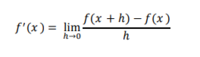
I imperatyvo New member Joined Sep 10, 2020 Messages 5 Oct 14, 2020 #1 f'(x) = lim [ (x+h-x) / h.(√(x+h) + √x) ] f'(x) = lim [ 1 / (√(x+h) + √x) ] what do I do with ℎ → 0 ? f'(x) = 1 / (√(x+0) + √x) f'(x) = 1 / (2√x) Last edited: Oct 14, 2020
f'(x) = lim [ (x+h-x) / h.(√(x+h) + √x) ] f'(x) = lim [ 1 / (√(x+h) + √x) ] what do I do with ℎ → 0 ? f'(x) = 1 / (√(x+0) + √x) f'(x) = 1 / (2√x)
D Deleted member 4993 Guest Oct 14, 2020 #2 imperatyvo said: View attachment 22320 f'(x) = lim [ (x+h-x) / h.(√(x+h) + √x) ] f'(x) = lim [ 1 / (√(x+h) + √x) ] what do I do with ℎ → 0 ? f'(x) = 1 / (√(x+0) + √x) f'(x) = 1 / (2√x) Click to expand... Looks good to me.
imperatyvo said: View attachment 22320 f'(x) = lim [ (x+h-x) / h.(√(x+h) + √x) ] f'(x) = lim [ 1 / (√(x+h) + √x) ] what do I do with ℎ → 0 ? f'(x) = 1 / (√(x+0) + √x) f'(x) = 1 / (2√x) Click to expand... Looks good to me.
I imperatyvo New member Joined Sep 10, 2020 Messages 5 Oct 14, 2020 #3 Subhotosh Khan said: Looks good to me. Click to expand... Seriously ? Thanks for confirming, I was very unsure
Subhotosh Khan said: Looks good to me. Click to expand... Seriously ? Thanks for confirming, I was very unsure