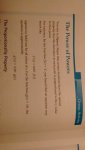
F Famfeld New member Joined Aug 22, 2016 Messages 1 Aug 22, 2016 #1 how can f'(x) = a constant times f(x) for the function f(x) = 2^x as this textbook tries to explain. I am stumped. Please help a desperate parent. Cheers, Fam Attachments IMG_20160822_215759030.jpg 483.2 KB · Views: 2
how can f'(x) = a constant times f(x) for the function f(x) = 2^x as this textbook tries to explain. I am stumped. Please help a desperate parent. Cheers, Fam
mmm4444bot Super Moderator Joined Oct 6, 2005 Messages 10,825 Aug 23, 2016 #2 Those constants in the image are rounded approximations of the natural logarithm of the base, in each case. ln(2) ≈ 0.69 ln(10) ≈ 2.30 Here's the rule, for differentiating the exponential function f(x) = b^x: f'(x) = b^x * ln(b)
Those constants in the image are rounded approximations of the natural logarithm of the base, in each case. ln(2) ≈ 0.69 ln(10) ≈ 2.30 Here's the rule, for differentiating the exponential function f(x) = b^x: f'(x) = b^x * ln(b)