
Hello.
What kind of probability distribution do you think would best describe a data set X(i) where, i = 1 to N elements, and X is a positive real number, and S is the total of all X values (i.e. S = Sum(X, i=1 to N)).
Below are two examples of the data type that I am discussing. These examples illustrate a kind of data that have an X(i) distribution that is characterised by a small number of i with large X values (comprising about 33% of S), a moderate number of i with mid-range X values (comprising about 33% of S), and a large number of i with low-range X values (comprising about 33% of S).
This distribution appears to be problematic if S represents a total cost/damage, and if the difficulty in mitigating S increases with N.
Could this type of data be described as a fractal distribution?
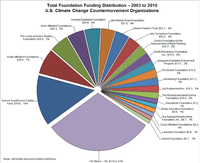
Fig 1. Example 1.
In the data sample shown above (see Example 1) just 2 elements account for about 40% of S, 10 elements account for about 30% of S, and then significantly more elements account for the last 30% of S.
Here is another example:
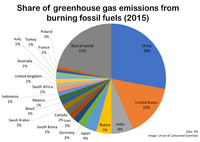
Fig. 2. Example 2.
In the data sample shown above (see Example 2) just 2 elements account for 43% of S, 18 elements account for the next 36% of S, and about 168 elements (i.e. rest of the world) account for the last 21% of S.
These distributions are problematic when X(i) represents damages/harms, and when it is more difficult to mitigate S as the total number of elements (N) increases.
How may we describe these distributions?
Are they fractal?
If they are fractal then is the probability of being able to mitigate 100% of S inherently low given that the probability of mitigation falls as N increases.
Any comments?
Thanks in advance,
DBC
What kind of probability distribution do you think would best describe a data set X(i) where, i = 1 to N elements, and X is a positive real number, and S is the total of all X values (i.e. S = Sum(X, i=1 to N)).
Below are two examples of the data type that I am discussing. These examples illustrate a kind of data that have an X(i) distribution that is characterised by a small number of i with large X values (comprising about 33% of S), a moderate number of i with mid-range X values (comprising about 33% of S), and a large number of i with low-range X values (comprising about 33% of S).
This distribution appears to be problematic if S represents a total cost/damage, and if the difficulty in mitigating S increases with N.
Could this type of data be described as a fractal distribution?
Fig 1. Example 1.
In the data sample shown above (see Example 1) just 2 elements account for about 40% of S, 10 elements account for about 30% of S, and then significantly more elements account for the last 30% of S.
Here is another example:
Fig. 2. Example 2.
In the data sample shown above (see Example 2) just 2 elements account for 43% of S, 18 elements account for the next 36% of S, and about 168 elements (i.e. rest of the world) account for the last 21% of S.
These distributions are problematic when X(i) represents damages/harms, and when it is more difficult to mitigate S as the total number of elements (N) increases.
How may we describe these distributions?
Are they fractal?
If they are fractal then is the probability of being able to mitigate 100% of S inherently low given that the probability of mitigation falls as N increases.
Any comments?
Thanks in advance,
DBC
Last edited: