For question two, since there are different starting paces, I'm really confused how you are supposed to calculate the probability. Do I find the average? The question also says that she is most comfortable running at 5.0 min/km or slower and her likelihood of either dropping out or speeding up is in the table. It seems simple and I thought I was supposed to find the joint probability but since there are different starting paces I don't know what to do.

You are using an out of date browser. It may not display this or other websites correctly.
You should upgrade or use an alternative browser.
You should upgrade or use an alternative browser.
Probability of Something with Multiple Alternatives?
- Thread starter shabu12
- Start date
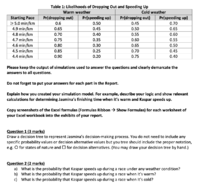
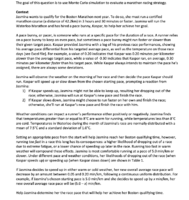
Ideally the problem would give you a priori probabilities of the weather being warm vs. being cold.
As they aren't explicitly stated I'd just assume they are equally probable and go from there.
The same goes for paces. You really need some sort of distribution on those pace rates to be able to compute the probability of speeding up.
As they aren't explicitly stated I'd just assume they are equally probable and go from there.
The same goes for paces. You really need some sort of distribution on those pace rates to be able to compute the probability of speeding up.

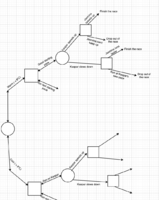
I tried to make a tree diagram for the first question but I got confused about the part where Jasmina chooses a starting pace. I think I'm in the right direction but I know I'm still missing parts. Also I know the cold branch is wrong as I wrote "Run w/o Kaspar" at first but I'm going to change that
Attachments
Ideally the problem would give you a priori probabilities of the weather being warm vs. being cold.
As they aren't explicitly stated I'd just assume they are equally probable and go from there.
The same goes for paces. You really need some sort of distribution on those pace rates to be able to compute the probability of speeding up.
I think it's continuous uniform distribution. Does that help at all for calculating the probabilities?
There still seems to be at least a page missing.
sorry! I edited and added the full context of the question in my original post. it's the long page of information. I apologize for the confusion and asking questions with missing information.