1200 Students Need A Unique Combination Lock...

KodeFawcett

New member
Joined
Mar 2, 2020
Messages
4
There are 1200 students at a school. Each student has a locker. A lock combination uses three numbers, such that consecutive numbers must be different. What is the least number of values that must be on the lock in order for all students to have a unique combination?

I know there will be 1200 unique combinations, but I am unsure how to narrow that number down to the least number of values.
 
Start with:

n is the magic number.

n * (n-1) * (n-2) > 1200

Does that get you anywhere? Maybe that's totally wrong. What's our theory?
 
Start with:

n is the magic number.

n * (n-1) * (n-2) > 1200

Does that get you anywhere? Maybe that's totally wrong. What's our theory?
It's strange. Our teacher told us we would be able to solve it with The Fundamental Counting Principle. The equation you listed is a fairly new concept to me.
 
What fundamental counting principles do you know?

If I were to ask, how many ways could you line up 12 books, three at a time, how would you count those ways?
 
What fundamental counting principles do you know?

If I were to ask, how many ways could you line up 12 books, three at a time, how would you count those ways?
Wouldn't that just be 12P3? As a permutation. I'm still getting used to it in all honesty
 
There are 1200 students at a school. Each student has a locker. A lock combination uses three numbers, such that consecutive numbers must be different. What is the least number of values that must be on the lock in order for all students to have a unique combination?
The condition consecutive numbers must be different can be misleading. Strictly speaking 909 is a valid combination because consecutive numbers are different. But with ten digits there are only \(10\cdot 9\cdot 10=900\) such combinations.
So lets add one digit: \(0,1,2,3,4,5,6,7,8,9,t\) now there are \(11\cdot 10\cdot 11=1210\) such combinations.
 
Last edited:
The condition consecutive numbers must be different can be misleading. Strictly speaking 909 is a valid combination because consecutive numbers are different. But with ten digits there are only \(10\cdot 9\cdot 10=900\) such compilations.
So lets add one digit: \(0,1,2,3,4,5,6,7,8,9,t\) now there are \(11\cdot 10\cdot 11=1210\) such compilations.
Where does the t come in? Wouldn't there be consecutive numbers between (10 x 11) if we go back to using all the numbers for the 11?
 
Where does the t come in? Wouldn't there be consecutive numbers between (10 x 11) if we go back to using all the numbers for the 11?
What pka is saying is that we would have 11 numbers available; for example, 0, 1, 2, 3, 4, 5, 6, 7, 8, 9, and 10 rather than just the 10 digits from 0 through 9. Of course, t does not have to be 10. It could be 19 or 877, but it is intuitive to go with the number right after 9, which is 10.

Follow now?

It is a very weird problem. If you have only the 10 digits to work with and may only use three of them, you can only come up with 1,000 unique permutations even with consecutive repetitions. So you you must have at least 11 numbers to work with.

EDIT: Given cubist's point, I think you actually need 12 numbers. You have 12 ways to pick the first number, 11 ways to pick the second number (11 remaining after the first pick), and 11 ways to pick the third number (11 remaining after the second pick, including the first pick).
 
Last edited:
Where does the t come in? Wouldn't there be consecutive numbers between (10 x 11) if we go back to using all the numbers for the 11?
If we use base eleven instead of base ten. The digits is base ten are, \(0,1,2,3,4,5,6,7,8,9\)
The digits is base eleven are, \(0,1,2,3,4,5,6,7,8,9,t\)
 
Wouldn't there be consecutive numbers between (10 x 11) if we go back to using all the numbers for the 11?

I think OP's second point is correct. Shouldn't there be 11*10*10 combinations otherwise the 2nd and 3rd digits would not be different?
 
I think OP's second point is correct. Shouldn't there be 11*10*10 combinations otherwise the 2nd and 3rd digits would not be different?
Absolutely not both of you are misreading the instructions, consecutive digits must be different. The combination \(989\) is valid but \(988\) is not.
Therefore with only ten digits there are ten choices for the first digit, nine choices for the second digit, and ten choices for the third digit.
So with only ten digits there are only \(900\) valid combinations.
 
Absolutely not both of you are misreading the instructions, consecutive digits must be different. The combination \(989\) is valid but \(988\) is not.
Therefore with only ten digits there are ten choices for the first digit, nine choices for the second digit, and ten choices for the third digit.
So with only ten digits there are only \(900\) valid combinations.
If you pick a value for the 2nd digit and the 3rd digit must be different from the 2nd (and yes it can be the same as the 1st) how can there be 10 digits that can be used for the 3rd digit. In your own example you say that 988 is not allowed because that 3rd position can't be 8--this leaves 10-1=9 digits for the 3rd slot.
 
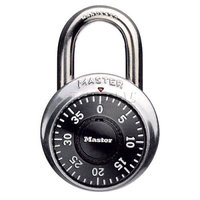
The problem says nothing about digits. It asks how many numbers there are on the dial. Have you not used combination locks with more than digits, say with numbers 0 to 39?

652867G.jpg
If there are x numbers available, there are x choices for the first, x-1 for the second (excluding the first), and x-1 for the third (excluding the second. So we have x(x-1)(x-1)>= 1200, and some quick trial and error gives the answer.
 
Last edited:
Suppose there are n numbers on the lock. We want n(n-1)(n-1)> 1200

Now solve for the least n.
 
I think OP's second point is correct. Shouldn't there be 1
Absolutely not both of you are misreading the instructions, consecutive digits must be different. The combination \(989\) is valid but \(988\) is not.
Therefore with only ten digits there are ten choices for the first digit, nine choices for the second digit, and ten choices for the third digit.
So with only ten digits there are only \(900\) valid combinations.
Sticking with eleven consecutive numbers (not digits), you have 11 choices for the first number. Then for the second number you have only ten choices. For the third number, you have only ten choices because you cannot choose whatever number you chose as the second number. Thus with 11 numbers, you have

[MATH]11 * 10 * 10 = 1100 < 1200.[/MATH]
You need 12 numbers.

[MATH]12 * 11 * 11 = 1452 > 1200.[/MATH]
 
Top