
Probability and Statistics

watchkimberly

New member
Joined
Feb 3, 2021
Messages
11
Researchers at Manchester Metropolitan University in England determined experimentally that if a piece of toast is dropped from a 2.5 foot high table, the probability that it lands butter side down is 0.81.

A) Explain what this probability means.
B) If you dropped 100 pieces of toast, will exactly 81 of them land butter side down? Explain


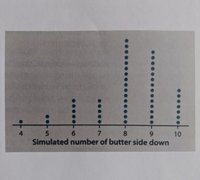
For question A- the dot plot shows the range at 6. It's peek is at 8 and it is skewed to the left. This is not a normal distribution.
For question B - The probability that 100 pieces of toast, will exactly 81 of them land butter side down, is that it is probably more likely. Given the height, there is hardly any room for the toast to flip or turn, but face butter side down.
 

Attachments

  • 0204210827.jpg
    0204210827.jpg
    3.5 MB · Views: 6
Researchers at Manchester Metropolitan University in England determined experimentally that if a piece of toast is dropped from a 2.5 foot high table, the probability that it lands butter side down is 0.81.

A) Explain what this probability means.
B) If you dropped 100 pieces of toast, will exactly 81 of them land butter side down? Explain


For question A- the dot plot shows the range at 6. It's peek is at 8 and it is skewed to the left. This is not a normal distribution.
For question B - The probability that 100 pieces of toast, will exactly 81 of them land butter side down, is that it is probably more likely. Given the height, there is hardly any room for the toast to flip or turn, but face butter side down.
You were asked:

"...will exactly 81 of them land...." - watch that word!!
 
Researchers at Manchester Metropolitan University in England determined experimentally that if a piece of toast is dropped from a 2.5 foot high table, the probability that it lands butter side down is 0.81.

A) Explain what this probability means.
B) If you dropped 100 pieces of toast, will exactly 81 of them land butter side down? Explain


For question A- the dot plot shows the range at 6. It's peek is at 8 and it is skewed to the left. This is not a normal distribution.
For question B - The probability that 100 pieces of toast, will exactly 81 of them land butter side down, is that it is probably more likely. Given the height, there is hardly any room for the toast to flip or turn, but face butter side down.
The wording of the problem doesn't seem to have anything to do with your graph. Was the graph part of the problem? (It says "simulated", while the problem says they actually experimented with real toast.)

A. What the probability means has nothing to do with whether anything is normal. Just apply the definition of probability.

B. The word that bothers me here is will, which implies certainty. What does the definition of probability tell you about that? This is a simple question to get you to think about the idea of probability, and is not about the details of the experiment.
 
Can I get help with a similar study but different question?
Researchers at Manchester Metropolitan University in England determined experimentally that if a piece of toast is dropped from a 2.5 foot high table, the probability that it lands butter side down is 0.81.
a) Maria decides to test this probability and drops 10 pieces of toast from a 2.5 foot table. Only 4 of them land butter side down. Should she be surprised?
Describe how you would carry out a simulation to answer this question, assuming the probability that the toast lands butter side down is 0.81. Do not perform the simulation. I guess, given the height, I would make the table a little higher or drop more than 10 pieces of toast.
 
Last edited:
Can I get help with a similar study but different question?
Researchers at Manchester Metropolitan University in England determined experimentally that if a piece of toast is dropped from a 2.5 foot high table, the probability that it lands butter side down is 0.81.
a) Maria decides to test this probability and drops 10 pieces of toast from a 2.5 foot table. Only 4 of them land butter side down. Should she be surprised?
Describe how you would carry out a simulation to answer this question, assuming the probability that the toast lands butter side down is 0.81. Do not perform the simulation. I guess, given the height, I would make the table a little higher or drop more than 10 pieces of toast.
The assignment is, "Describe how you would carry out a simulation". It doesn't ask about a physical experiment, much less a different experiment, which would contribute nothing to answering the question, "Should she be surprised [by the results of the specific experiment she performed]?".

What might a simulation be? What kinds of simulation have you been taught about? (I'm assuming a computer is involved.)
 
Can I get help with a similar study but different question?
Researchers at Manchester Metropolitan University in England determined experimentally that if a piece of toast is dropped from a 2.5 foot high table, the probability that it lands butter side down is 0.81.
a) Maria decides to test this probability and drops 10 pieces of toast from a 2.5 foot table. Only 4 of them land butter side down. Should she be surprised?
Describe how you would carry out a simulation to answer this question, assuming the probability that the toast lands butter side down is 0.81. Do not perform the simulation. I guess, given the height, I would make the table a little higher or drop more than 10 pieces of toast.
Please show us what you have tried and exactly where you are stuck.

Please follow the rules of posting in this forum, as enunciated at:


Please share your work/thoughts about this problem.
 
Top