
K King E New member Joined Nov 24, 2021 Messages 1 Nov 24, 2021 #1 Consider a ΔABC. The three sides given are: AB = 8cm AC = 15cm BC = 17cm The angle required is ∠A. If I apply Pythagoras theorem, that is BC² = AB² + AC² in this case, then I come to know that it is a right angle. Is there a way to find ∠A without using the Pythagoras theorem BC² = AB² + AC² ?
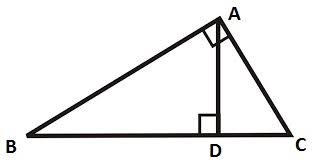
Consider a ΔABC. The three sides given are: AB = 8cm AC = 15cm BC = 17cm The angle required is ∠A. If I apply Pythagoras theorem, that is BC² = AB² + AC² in this case, then I come to know that it is a right angle. Is there a way to find ∠A without using the Pythagoras theorem BC² = AB² + AC² ?
Steven G Elite Member Joined Dec 30, 2014 Messages 14,603 Nov 24, 2021 #3 You can also use Heron's formula to find the area and hence the length AD. Then you can find the two angles which make up <A.
You can also use Heron's formula to find the area and hence the length AD. Then you can find the two angles which make up <A.
blamocur Elite Member Joined Oct 30, 2021 Messages 3,223 Nov 24, 2021 #4 Once you know the triangle's area you can figure out sin(A) without analyzing the "sub-angles" (https://www.cuemath.com/measurement/area-of-triangle/)
Once you know the triangle's area you can figure out sin(A) without analyzing the "sub-angles" (https://www.cuemath.com/measurement/area-of-triangle/)
Steven G Elite Member Joined Dec 30, 2014 Messages 14,603 Nov 24, 2021 #5 blamocur said: Once you know the triangle's area you can figure out sin(A) without analyzing the "sub-angles" (https://www.cuemath.com/measurement/area-of-triangle/) Click to expand... Yeah, yeah you're right. Having the line AD steering me in the face made me make my comment.
blamocur said: Once you know the triangle's area you can figure out sin(A) without analyzing the "sub-angles" (https://www.cuemath.com/measurement/area-of-triangle/) Click to expand... Yeah, yeah you're right. Having the line AD steering me in the face made me make my comment.