
You are using an out of date browser. It may not display this or other websites correctly.
You should upgrade or use an alternative browser.
You should upgrade or use an alternative browser.
Help with probability and statistic tasks
- Thread starter TheGood7
- Start date

pka
Elite Member
- Joined
- Jan 29, 2005
- Messages
- 11,978
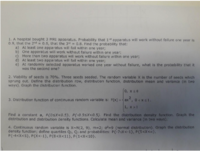
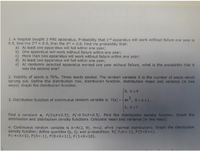
You have posted four rather involved questions. However, you have shown none of your own work, moreover you have not told what sort of help you need.View attachment 16511
If someone could help me solve these I would really appreciate. I am currently working on them but needs to be sure my calculations are correct.
This is not a homework service. If you need answers, then please look elsewhere.

Steven G
Elite Member
- Joined
- Dec 30, 2014
- Messages
- 14,605
I solved them. But how does that help you? Can you show your calculations/work so a helper can actually help you if needed?View attachment 16511
If someone could help me solve these I would really appreciate. I am currently working on them but needs to be sure my calculations are correct.
HallsofIvy
Elite Member
- Joined
- Jan 27, 2012
- Messages
- 7,760
Then show us what you did so we can check it!View attachment 16511
If someone could help me solve these I would really appreciate. I am currently working on them but needs to be sure my calculations are correct.
Steven G
Elite Member
- Joined
- Dec 30, 2014
- Messages
- 14,605
What do you expect when we ask a student to do their own work?I think you all skered him away!
What do you expect when we ask a student to do their own work?
I'm guessing adoration and complete obedience are out?
Steven G
Elite Member
- Joined
- Dec 30, 2014
- Messages
- 14,605
Did you forget which forum you are on?I'm guessing adoration and complete obedience are out?
I think you all skered him away!
Did you forget which forum you are on?
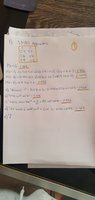
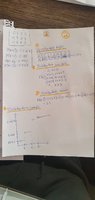
I have done them but honestly I think they are all correct so I would really appreciate if you could send the calculations so I could see what I have done wrong
 Really appreciate you taking your time looking at my post!
D
Deleted member 4993
Guest
In that case, please share your work for those problems. We can confirm your workNumber 1 and 2, I am sure I have it correct. But 3 and 4 looked very difficult to solve..
For 3 and 4, please show us:
how did you start and
exactly where you are stuck.
Those will give us an idea as to where we should start to help you. Additionally,
please post only one problem per thread.
You have posted four problems here - should have been four separate threads.
pka
Elite Member
- Joined
- Jan 29, 2005
- Messages
- 11,978
About #3. The vocabulary in the question is problematic.To be honest for 3 and 4, i dont know where to start correctly..
The term distribution function is not in standard use in probability courses taught in North America.
The function's definition given is that of a CDF, cumulative distribution function rather than a pdf, probability distribution function.
The latter must return to almost zero, where as the CDF reaches a max of 1. If this is the case then \({\bf{a}}=1\)
That seems odd for this sort of question. Nevertheless this means that:
\(\mathscr{P}(-0.5\le X\le 0.5)=\mathscr{P}(0\le X\le 0.5) =(0.5)^2\).
Steven G
Elite Member
- Joined
- Dec 30, 2014
- Messages
- 14,605
First you say that you did them all and want someone here to give you their answers so you can compare them to your own. Then you go on to say in another post that you actually did not do #3 and #4.
So you are trying to cheat by coming here. You are not even asking how to do the problem--you just want the answer.
At this site the helpers frown on cheater.
My advice to you is to go elsewhere.
So you are trying to cheat by coming here. You are not even asking how to do the problem--you just want the answer.
At this site the helpers frown on cheater.
My advice to you is to go elsewhere.
Please dont help. I tried to do 3 and 4 but it was incorrect so you want me to show something that is totally out of this world? And i cant even understand why you call this a cheat, such a disrespect. It is not like im in a exam right now waiting for you to give me the answers. These are only pre-exam preparation questions.First you say that you did them all and want someone here to give you their answers so you can compare them to your own. Then you go on to say in another post that you actually did not do #3 and #4.
So you are trying to cheat by coming here. You are not even asking how to do the problem--you just want the answer.
At this site the helpers frown on cheater.
My advice to you is to go elsewhere.
If you are going to start discussions rather than helping then you can leave this thread. Tired of this childish thing. I am not asking you to rob a bank with me.
Thanks alot will check out!About #3. The vocabulary in the question is problematic.
The term distribution function is not in standard use in probability courses taught in North America.
The function's definition given is that of a CDF, cumulative distribution function rather than a pdf, probability distribution function.
The latter must return to almost zero, where as the CDF reaches a max of 1. If this is the case then \({\bf{a}}=1\)
That seems odd for this sort of question. Nevertheless this means that:
\(\mathscr{P}(-0.5\le X\le 0.5)=\mathscr{P}(0\le X\le 0.5) =(0.5)^2\).