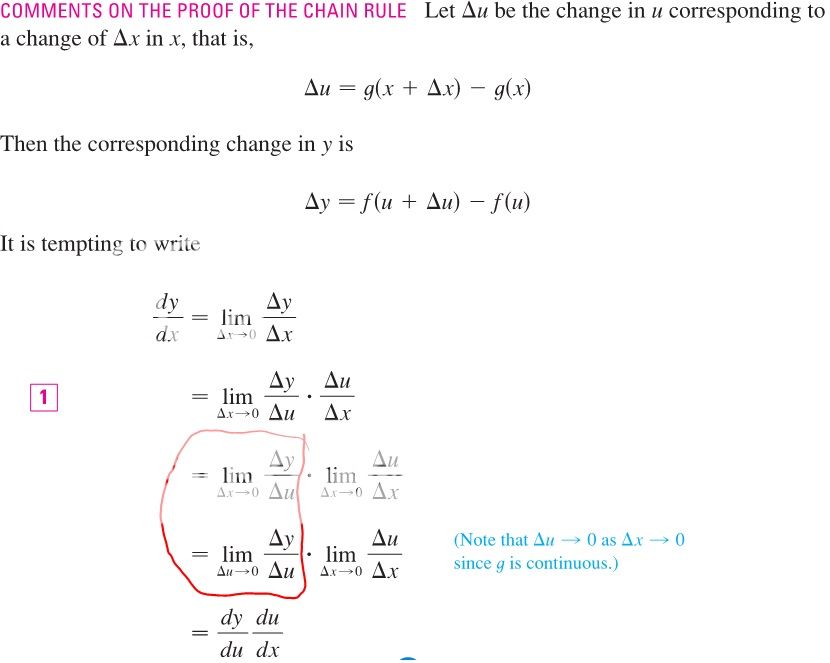
If DeltaU-->0 as DeltaX-->0 then f(x)-->L as DeltaX-->0 or as DeltaU-->0
]I am trying to prove the following theorem. I think I have the right givens and I think I just need to make the delta from the second given equal to the Epsilon from the first given so I can use the transitive property of implication.

]I am trying to prove the following theorem. I think I have the right givens and I think I just need to make the delta from the second given equal to the Epsilon from the first given so I can use the transitive property of implication.