Hey folks,
New member here (not a native english speaker, but i'll try my best)
I've started attending a university just this year, and now i'm studying for an exam, and i've encountered this ''tricky'' limit in one of my books and it says specifically not to use the L'Hopital's rule.(sorry, but i'll write this in plain text)
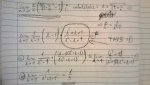
lim n to infinity [n/2 (((1+2/n)^(1/3))-1)]
so i've tried pretty much everything, substituting the 3rd root, playing around with it trying to get something to ''cancel out'' but it seems like everything i do i always end up moving in a circle, always coming back to where i started.
according to my book, symbolab, wolfram, and numerous other sources, the limit = 1/3.
anyway, i'm sure there is just something wrong with how i look at it, and i hope some of you good people could help me out here.
btw, sorry if it's hard to understand but as i said i'm not a native speaker.
thx for help in advance
New member here (not a native english speaker, but i'll try my best)
I've started attending a university just this year, and now i'm studying for an exam, and i've encountered this ''tricky'' limit in one of my books and it says specifically not to use the L'Hopital's rule.(sorry, but i'll write this in plain text)
lim n to infinity [n/2 (((1+2/n)^(1/3))-1)]
so i've tried pretty much everything, substituting the 3rd root, playing around with it trying to get something to ''cancel out'' but it seems like everything i do i always end up moving in a circle, always coming back to where i started.
according to my book, symbolab, wolfram, and numerous other sources, the limit = 1/3.
anyway, i'm sure there is just something wrong with how i look at it, and i hope some of you good people could help me out here.
btw, sorry if it's hard to understand but as i said i'm not a native speaker.
thx for help in advance