
Help me Understand This Area

nasi112

Full Member
Joined
Aug 23, 2020
Messages
713
I used to think that integration always represented the area under a curve. Recently, I encountered some problems involving area calculations, and only after a few attempts did I realize that parts of the graph were below the x-axis, causing the positive and negative areas to cancel each other out.

Since I am not very experienced at visualizing the graph of f(x), whenever I am asked to find the area under a curve, my instinct is to simply compute the integration.

That is how I approached these problems every time, assuming that the integration would directly give the area. Area = [math]\int_{a}^{b} f(x)[/math]
I solved this yesterday

[math]\int_{0}^{3} x(x-2)(x+2) dx = 2.25[/math]
The area happened to be 10.25 squared inches. I do not understand when and when not to include the negative area?
 
I do not understand when and when not to include the negative area?
I may be missing your question; but when you're asked for a definite integral, you just do that; when you're asked for the area between a curve and the x-axis, you find where it's positive or negative and integrate those (or, equivalently, integrate the absolute value).

If you're asked to find the area under a curve, and it is not always positive, then there's a little ambiguity in the problem, and you ask.
 
You have to integrate from the left boundary to the next zero, to the next zero, etc., and finally from the right-most zero to the right boundary, and add all absolute values of those results in order to get an area.

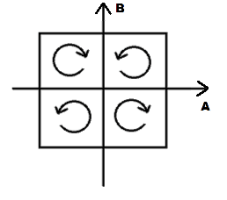
The reason is that areas are always positive. Integrals, on the other side are oriented volumes. They can be positive or negative depending on whether you go clockwise or counterclockwise through the area. It becomes obvious in the formula
[math] \int_a^a f(x)\,dx=0= \int_a^b f(x)\,dx-\int_a^b f(x)\,dx=\int_a^b f(x)\,dx+\int_b^a f(x)\,dx\,.[/math]
Hence, getting an area means avoiding that the partial sections cancel each other. Look at the integral [imath] \displaystyle{\int_{-1}^1 x^3\,dx} [/imath] to visualize the situation.
 
A good way to think about it is that a definite integral gives signed area, not always the actual geometric area.


Areas above the x-axis count as positive, and areas below the x-axis count as negative. That's why parts of the graph can cancel each other out when you integrate.


If a problem asks for the net change or simply asks you to evaluate the integral, then you keep the signs and compute:

∫abf(x) dx\int_a^b f(x)\,dx∫abf(x)dx
If the problem asks for the total area between the curve and the x-axis, then every region must be counted as positive. In that case, you either split the integral at the x-intercepts or integrate:

∫ab∣f(x)∣ dx\int_a^b |f(x)|\,dx∫ab∣f(x)∣dx
In your example, f(x)=x(x−2)(x+2)f(x)=x(x-2)(x+2)f(x)=x(x−2)(x+2) crosses the x-axis at x=0x=0x=0 and x=2x=2x=2. The part from 000 to 222 lies below the x-axis, so its contribution to the integral is negative. To find the actual area, you must add the magnitudes of the regions instead of letting them cancel.


A useful rule of thumb is:


  • Integral → signed area (positive and negative parts can cancel).
  • Area → always positive, so treat regions below the x-axis as positive contributions.
 
I may be missing your question; but when you're asked for a definite integral, you just do that; when you're asked for the area between a curve and the x-axis, you find where it's positive or negative and integrate those (or, equivalently, integrate the absolute value).

If you're asked to find the area under a curve, and it is not always positive, then there's a little ambiguity in the problem, and you ask.
The question did not ask to compute the definite integral. It said compute the area of f(x) from 0 to 3. The only interpretation to this to find the area under the curve.

You have to integrate from the left boundary to the next zero, to the next zero, etc., and finally from the right-most zero to the right boundary, and add all absolute values of those results in order to get an area.
Your suggestion is to find the zeros of the function, right?

x(x - 2)(x + 2) = 0

This is not difficult. I will do it next time.

When I get negative area I convert to positive by the absolute value. I will check this on all integration I solved before.

A good way to think about it is that a definite integral gives signed area, not always the actual geometric area.


Areas above the x-axis count as positive, and areas below the x-axis count as negative. That's why parts of the graph can cancel each other out when you integrate.


If a problem asks for the net change or simply asks you to evaluate the integral, then you keep the signs and compute:

∫abf(x) dx\int_a^b f(x)\,dx∫abf(x)dx
If the problem asks for the total area between the curve and the x-axis, then every region must be counted as positive. In that case, you either split the integral at the x-intercepts or integrate:
The question was compute the area of f(x) from 0 to 3.
 
Here is a picture of how areas are oriented differently, the cause of the different signs if integrated:

1782043581910.png
So, real areas and integrations as oriented volumes are mathematically different things. The former is positive by definition, the other one has a sign expressing an orientation. This sign makes the result of an integration always less or equal the actual area, because it can add "negative areas".
 
Top