
Mathematicians Who Changed History
Mathematics has been shaped by people from every corner of the world, across thousands of years. Some worked with sticks in sand; others lost their jobs, their freedom, or their lives for the right to do math at all. Here are ten who left a permanent mark.
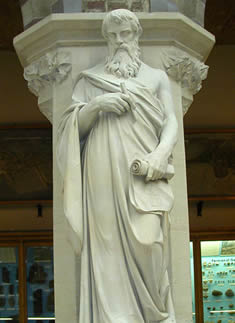
Euclid
(c. 325 – c. 265 BCE · Alexandria, Egypt)
Euclid wrote Elements, a collection of 13 books that organized all of geometry — and much of arithmetic — into a logical system built from a handful of simple assumptions. It became the most widely used mathematics textbook in history, studied in schools for over two thousand years. Every geometry proof you've written follows the axiomatic method he established: start with what you know, and reason your way to what you don't. Wikipedia →
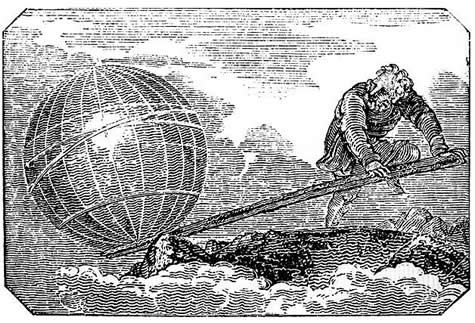
Archimedes
(c. 287 – c. 212 BCE · Syracuse, Sicily)
Archimedes calculated the most accurate value of π in the ancient world and developed methods for finding areas and volumes that anticipated calculus by nearly two thousand years. He was also a brilliant engineer, designing war machines and the Archimedes screw — a device still used today for moving water and grain. The story goes that he leaped from his bath shouting "Eureka!" when he realized that a submerged object displaces water equal to its own volume — which is still the principle behind ship design and buoyancy calculations. Wikipedia →
.jpg)
Hypatia
(c. 360 – 415 CE · Alexandria, Egypt)
Hypatia is the first woman in recorded history known primarily as a mathematician and philosopher. She taught advanced mathematics and astronomy in Alexandria, edited her father's commentaries on Euclid and Ptolemy, and attracted students from across the ancient world. Her murder by a political mob in 415 CE cut short a remarkable career and is often cited as a symbolic end to the classical tradition of Greek learning. Wikipedia →

Muhammad ibn Musa al-Khwarizmi
(c. 780 – c. 850 CE · Khwarazm, Persia)
Al-Khwarizmi wrote the book that gave us the word "algebra" — the title included the Arabic phrase al-jabr, describing the process of balancing equations, and the word stuck. His name in Latin transliteration (Algoritmi) gave us the word "algorithm." Every algebra class ever taught, and every piece of software ever written, traces directly back to the methods he formalized in ninth-century Baghdad. Wikipedia →
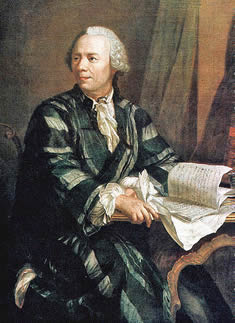
Leonhard Euler
(1707 – 1783 · Basel, Switzerland)
Euler is the most prolific mathematician in history, producing groundbreaking work in virtually every area of the subject — and continuing to publish meaningful results even after going completely blind in his late fifties. He invented much of the notation we still use today: e for the base of natural logarithms, i for the imaginary unit, π for pi, f(x) for functions, and Σ for summation. If you've ever written a function or used e in calculus class, you're writing in his handwriting. Wikipedia →
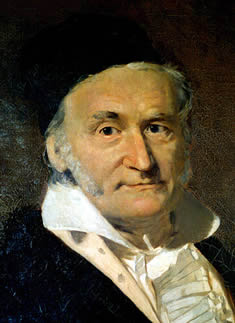
Carl Friedrich Gauss
(1777 – 1855 · Brunswick, Germany)
Known as the "Prince of Mathematics," Gauss made major contributions to number theory, statistics, astronomy, and physics — many of them before the age of 25. The bell-shaped normal distribution at the heart of modern statistics is called the Gaussian distribution in his honor. As a schoolboy, he reportedly summed all the integers from 1 to 100 in seconds by recognizing that 1 + 100 = 101, 2 + 99 = 101, and so on for 50 pairs — a story his teachers told for the rest of their lives. Wikipedia →

Ada Lovelace
(1815 – 1852 · London, England)
The daughter of the poet Lord Byron, Lovelace collaborated with inventor Charles Babbage on his mechanical Analytical Engine and wrote what is widely recognized as the first computer algorithm — a procedure for calculating Bernoulli numbers using the machine. More remarkably, she understood decades before anyone else that such a machine could go beyond arithmetic to manipulate any kind of symbol, not just numbers. Every program ever written is built on the conceptual foundation she described in 1843. Wikipedia →

Srinivasa Ramanujan
(1887 – 1920 · Erode, India)
Largely self-taught, growing up in poverty in South India with almost no formal mathematical training, Ramanujan independently developed thousands of formulas and theorems — many of which professional mathematicians are still working to fully understand a century later. He mailed pages of results to the Cambridge mathematician G. H. Hardy, who arranged for him to come to England and called his work "certainly the most remarkable I have received." Ramanujan died at 32, and his notebooks continue to generate new mathematics today. Wikipedia →
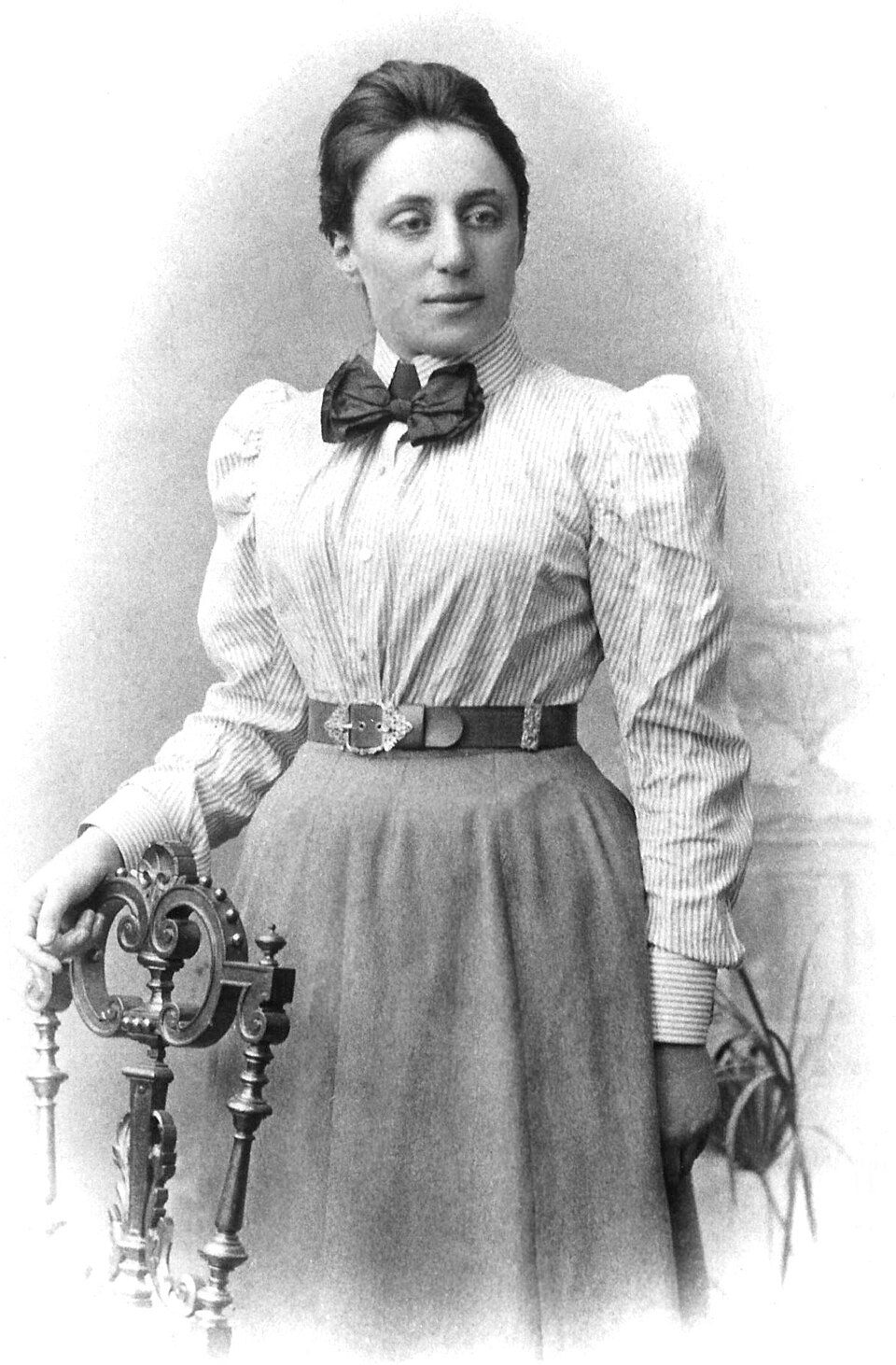
Emmy Noether
(1882 – 1935 · Erlangen, Germany)
Noether transformed abstract algebra and proved one of the most profound theorems in all of physics: that every symmetry in nature corresponds to a conservation law, which explains why energy, momentum, and electric charge are conserved. Einstein called her "the most significant creative mathematical genius thus far produced." She accomplished all of this while being barred from teaching at German universities for years on the grounds that she was a woman, and later fled Nazi Germany for the United States. Wikipedia →
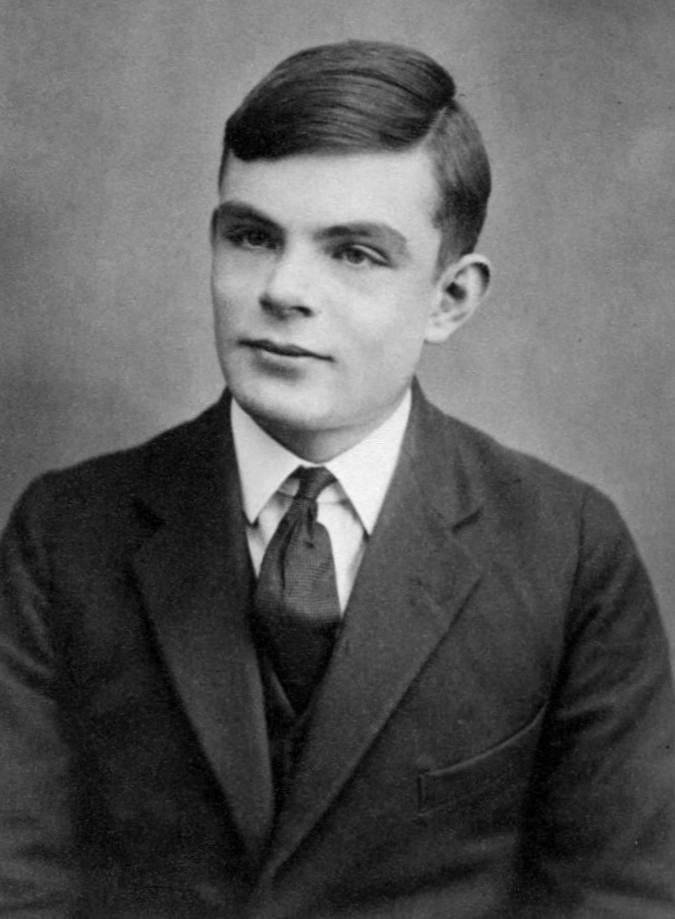
Alan Turing
(1912 – 1954 · London, England)
Turing invented the theoretical model of the modern computer — the Turing machine — and laid the conceptual foundations for computing and artificial intelligence in a landmark 1936 paper. During World War II he led the team that broke the Nazi Enigma cipher, an achievement historians estimate shortened the war by two years and saved millions of lives. He was later prosecuted by the British government for being gay, subjected to forced chemical treatment, and died at 41 — a tragedy that took decades for the government to formally acknowledge. Wikipedia →

Maryam Mirzakhani
(1977 – 2017 · Tehran, Iran)
Photo by Gert-Martin Greuel, CC BY-SA 2.0 de, Link
In 2014, Mirzakhani became the first woman — and the first Iranian — to win the Fields Medal, the highest honor in mathematics. Her work explored the geometry of curved surfaces in ways that connect to physics, string theory, and pure mathematics in unexpected directions. She died of cancer at 40, at the height of her powers, and is remembered as one of the most original mathematical minds of her generation. Wikipedia →
Portrait images sourced from Wikimedia Commons and believed to be in the public domain or freely licensed. The image of Hypatia is an 1885 oil painting by Charles William Mitchell.